
Choosing what to automate first matters more than choosing the tool. In 2025, MIT's NANDA initiative reported that 95% of the organisations it studied had seen no measurable return from their generative AI spending (The Register, August 2025). The same research found that spending skewed towards visible sales and marketing tools, while back-office automation often delivered the better return (MediaPost, August 2025). Where the money went mattered as much as how much was spent.
For a Mauritian business of 30 to 300 people, the stakes are practical. Labour is getting more expensive: the national minimum wage rose to Rs 17,745 a month on 1 January 2026, up from Rs 17,110, as published in the Government Gazette on 17 January 2026 (WageIndicator, February 2026). Every hour your team spends retyping, chasing and copying costs more than it did last year.
This guide sets out the method we use in our AI Roadmap to decide what to automate first, and what to leave alone.
Key Takeaways
- Pick your first automation by measurement, not enthusiasm. MIT found back-office automation often paid back better than more visible sales and marketing projects.
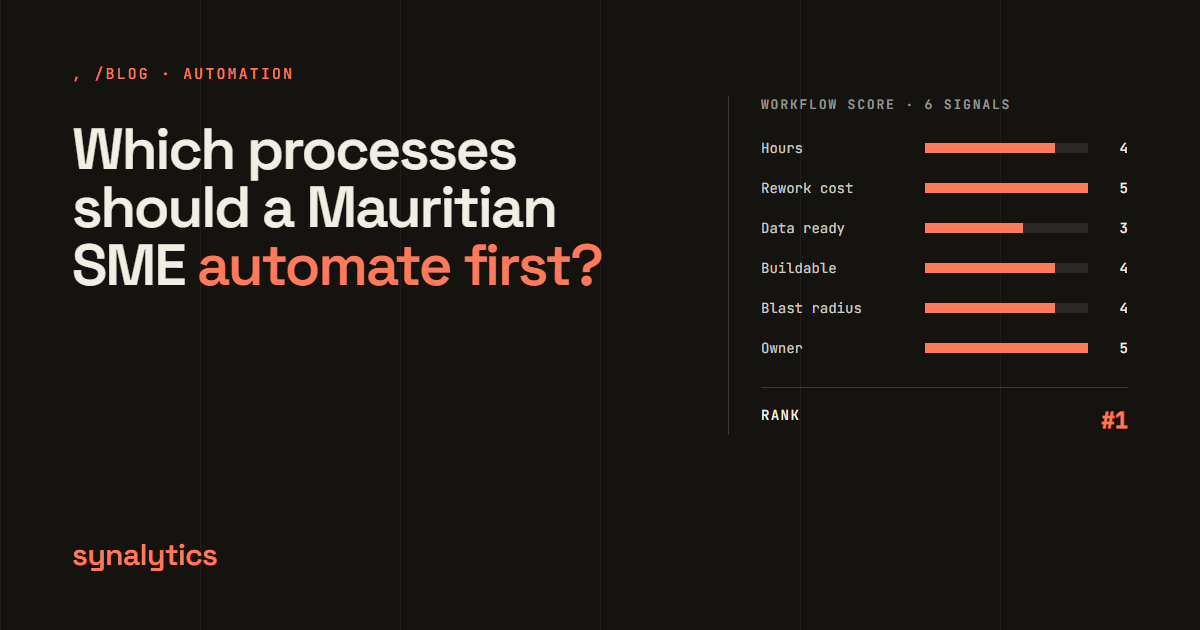
- Score every recurring workflow on six signals: hours consumed, cost of rework, data readiness, buildability, blast radius and a named owner.
- Measure hours from your own systems where you can, and label anything you could not measure as an estimate.
- Keep a written do-not-build list. Rejecting weak candidates protects the budget for the strong ones.